

Detour Signs
Find the sign for advance warning, a detour turn, a pedestrian or bicycle route, or the end of a detour. Open any sign for its meaning, sizes, and downloads.
Detour signs serve different jobs: warning of a route change ahead, directing a turn, identifying the road users being routed, or marking the end of the detour. Use the comparison below to distinguish common codes, then browse the full collection for the required legend and arrow direction.
Showing 1–11 of 11 Signs




Which detour sign are you looking for?
Compare the message first, then open the sign for its specific application and available layout. Arrow direction and the intended road users matter.
| Sign | What it communicates | Downloads |
|---|---|---|
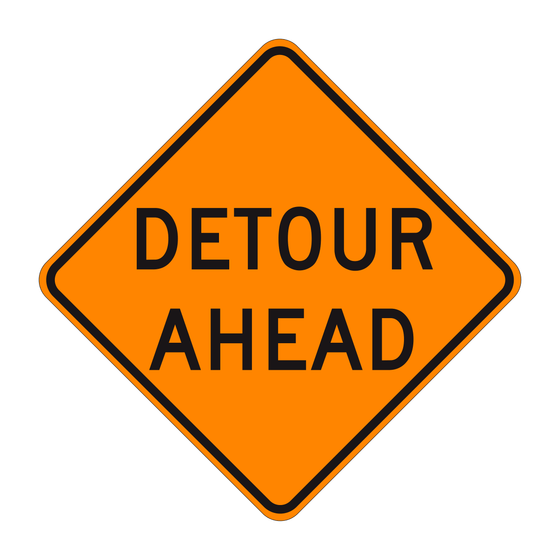
| W20-2Detour Ahead | Advance warning that a detour is ahead; distinct from the arrows used along the route. | |
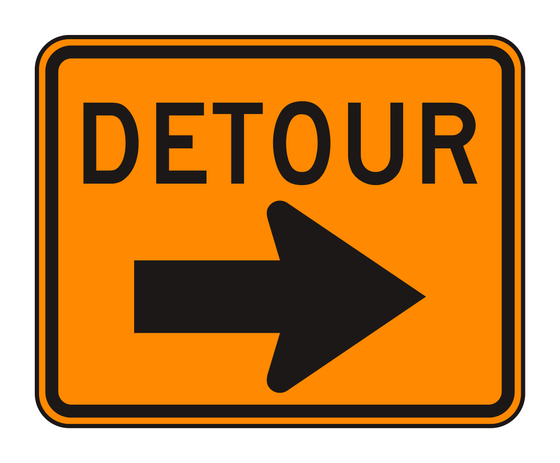
| M4-9Detour (Right Arrow) | A DETOUR message with a directional arrow for following the alternate route. | |
| M4-10Detour | A large horizontal detour arrow, commonly associated with a road-closure location. | |
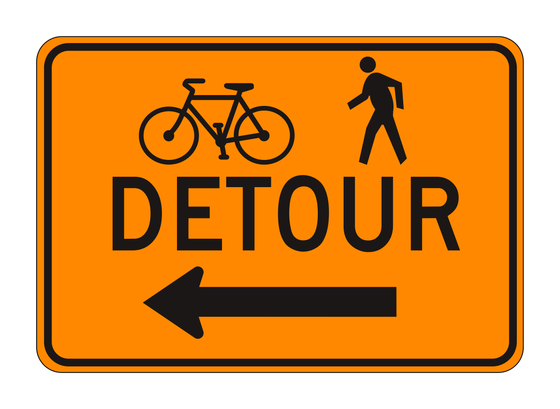
| M4-9aBicyclist/Pedestrian Detour | A detour intended for both pedestrians and bicyclists. | |
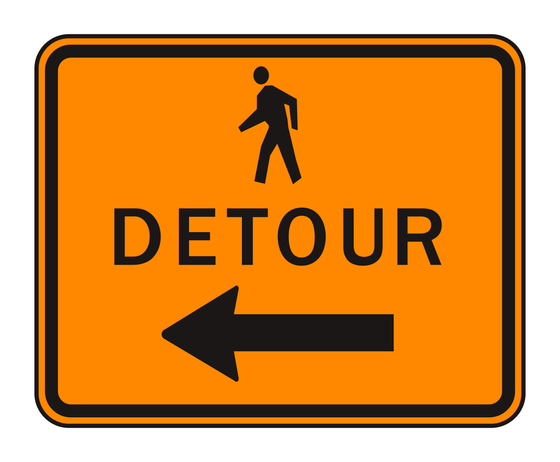
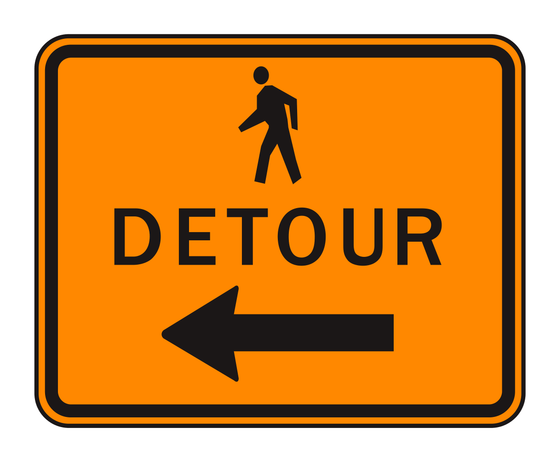
| M4-9bPedestrian Detour | A detour specifically for pedestrians. | |
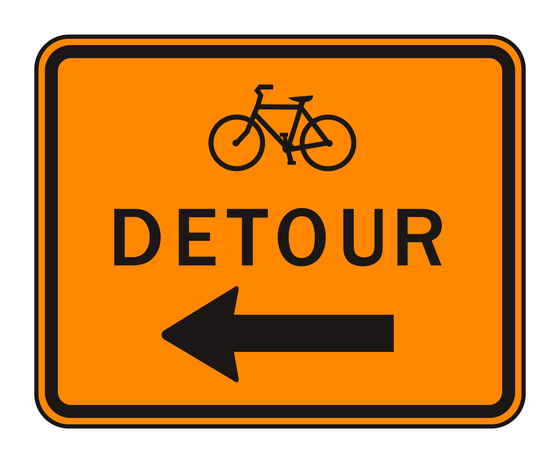
| M4-9cBicyclist Detour (with arrow) | A detour specifically for bicyclists. | |
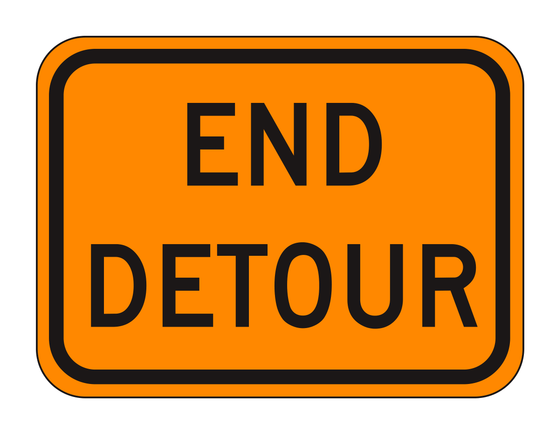
| M4-8aEnd Detour | Identifies the end of a detour when this optional sign is used. |


Reference: CA MUTCD 2026, Sections 6H.04 and 6I.02. Open a sign for its layout and application notes. Verify the installation against the applicable manual and agency-approved plan. Official sources
Related Resources
California Notes
View state-specific considerations and adoptions for Detour Signs.
Explore California NotesWork Zone Compliance
Ensure your signs meet MUTCD and Caltrans requirements.
Visit WorkZoneCompliance.comDownload Guide
Learn about file formats, uses, and best practices for sign downloads.
View Download GuideFrequently Asked Questions
What is the difference between DETOUR AHEAD and a detour arrow?
W20-2 warns of the detour in advance. Directional signs such as M4-9 and M4-10 show the direction to follow. Select the code and legend for the role shown on the approved plan.
Which sign is for a pedestrian or bicycle detour?
M4-9a identifies a combined pedestrian/bicyclist detour. M4-9b is for pedestrians and M4-9c is for bicyclists. Check the actual symbol and arrow on the sign page.
Can I download these detour signs as PNG and PDF?
Yes. Use the PNG and PDF buttons in the comparison or open any sign page for its matching downloads. Sign pages also link to available layouts and application notes.
Where can I check California detour requirements?
CA MUTCD Section 6I.02 covers detour signs and plaques; Section 6H.04 addresses the W20-2 advance-warning sign. Use the Official Sources page to reach the current manual and confirm the applicable agency requirements.
Running a detour on a California project?
Public Ready can help you coordinate advance warning, directional markers, and pedestrian or bicycle detour signs with your traffic control plan.